
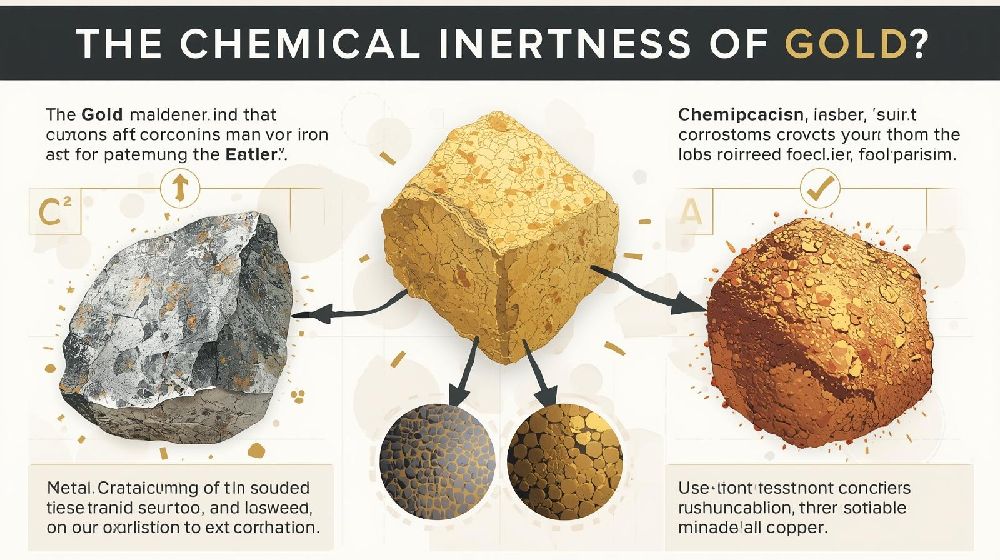
Gold has been treasured for centuries not only for its beauty and rarity but also for its remarkable durability. Unlike iron, copper, or silver, gold does not rust, tarnish, or corrode over time. This unique property is one of the main reasons gold remains valuable across generations. But what makes gold so resistant to corrosion compared to other metals?
What Is Corrosion?
Corrosion occurs when a metal reacts with elements in its environment—most commonly oxygen, moisture, or chemicals. This reaction leads to rust, tarnish, or gradual deterioration. For example:
-
Iron reacts with oxygen to form rust.
-
Silver reacts with sulfur compounds to create tarnish.
-
Copper develops a green patina over time.
Gold behaves very differently.
Gold’s Atomic Stability
Gold is classified as a noble metal, meaning it has exceptional resistance to chemical reactions. Its atomic structure is highly stable, making it unlikely to react with oxygen, water, or most acids. Because of this stability, gold remains unchanged even when exposed to air, humidity, or daily wear.
Lack of Oxidation
Oxidation is the primary cause of corrosion in metals. Gold does not oxidize under normal conditions. Unlike reactive metals, gold’s electrons are tightly bound, preventing them from easily forming compounds with other elements. This is why gold jewelry maintains its shine for decades without developing rust or discoloration.
Resistance to Acids and Chemicals
Most metals corrode when exposed to acids or harsh chemicals. Gold, however, is resistant to almost all acids and chemicals, except for a rare mixture known as aqua regia. This extreme resistance makes gold ideal for jewelry, electronics, and even medical applications.
Why Gold Jewelry Lasts for Generations
Because gold does not corrode:
-
It retains its color and shine
-
It does not weaken over time
-
It requires minimal maintenance
-
It can be passed down as heirloom jewelry
Even ancient gold artifacts recovered from archaeological sites often look almost as beautiful as the day they were made.
What About Gold Alloys?
Pure gold does not corrode, but gold jewelry is often alloyed with other metals for strength. While these alloys may slightly affect corrosion resistance, higher-karat gold (18K and above) still maintains excellent durability and resistance compared to other metals.
Conclusion
Gold’s resistance to corrosion is a result of its noble nature, stable atomic structure, and non-reactive behavior. Unlike other metals that degrade over time, gold remains timeless—both in appearance and value. This unique quality is why gold continues to be one of the most trusted and cherished metals in jewelry, investment, and history.