
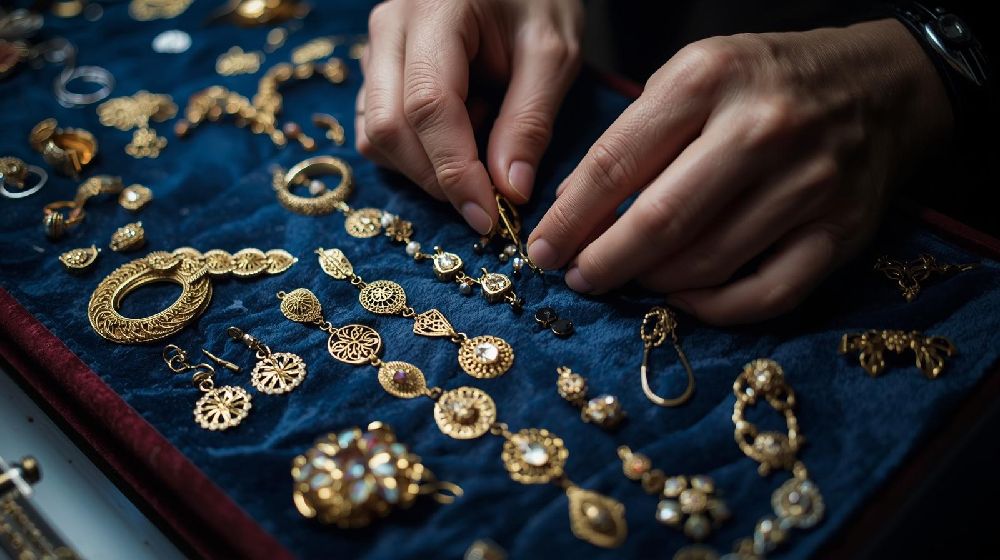
In the world of gold jewelry, every masterpiece begins long before production starts. It begins with design sampling—a crucial stage that transforms creative ideas into practical, wearable art. Whether it’s a modern bangle, a traditional necklace, or a lightweight daily-wear piece, design sampling ensures that every detail matches the brand’s quality, aesthetics, and manufacturing standards.
In today’s competitive market, the demand for precision, uniqueness, and consistency in gold jewelry is higher than ever. Design sampling helps manufacturers eliminate risks, refine concepts, and guarantee that the final product is both beautiful and production-ready.
What Is Design Sampling?
Design sampling is the process of creating a prototype of a jewelry piece before mass production begins.
This sample is used to:
-
Check the accuracy of the design
-
Test manufacturing feasibility
-
Make necessary improvements
-
Approve final measurements and weight
-
Ensure customer satisfaction
For manufacturers, it’s an essential quality-control step. For customers, it’s proof that the finished product will match their expectations.
Why Design Sampling Matters in Gold Jewelry Manufacturing
1. Ensures Accuracy and Precision
A design may look perfect on paper or software, but real-world execution can reveal issues with:
-
Thickness
-
Weight
-
Balance
-
Joint placement
-
Stone settings
-
Comfort
Sampling helps detect such issues early, ensuring the final piece is flawless.
2. Reduces Production Errors
Jewelry made without a proper sample is more prone to:
-
Structural weaknesses
-
Misaligned patterns
-
Incorrect sizing
-
Polishing inconsistencies
Sampling helps manufacturers avoid costly mistakes and rework during bulk production.
3. Helps Evaluate Aesthetic Appeal
A sample allows designers and clients to see the actual:
-
Shine
-
Texture
-
Color tone (yellow, white, rose)
-
Finish (matte, glossy, 3D, diamond-cut)
This ensures the final product meets branding and aesthetic goals.
4. Tests Manufacturing Feasibility
Some designs are beautiful in concept but challenging to produce.
Design sampling highlights whether a piece can be made through:
-
Casting
-
CNC
-
Laser cutting
-
Handmade work
-
Fusion techniques
This makes it easier to choose the right manufacturing method.
5. Prevents Material Wastage
Gold is precious—every milligram counts.
Sampling helps manufacturers:
-
Optimize gold weight
-
Improve metal flow in casting
-
Reduce scrap and metal loss
-
Maintain weight accuracy for bulk orders
This increases efficiency and saves cost.
6. Supports Custom Orders and Client Approvals
Many clients want personalized jewelry. A sample gives them the confidence that their design will look exactly as imagined.
Through sampling, customers can request:
-
Size adjustments
-
Pattern refinements
-
Color changes
-
Stone selection
-
Finish upgrades
This ensures 100% satisfaction before final production.
7. Essential for Creating Trend-Driven Collections
Top jewelry brands launch seasonal collections.
Sample pieces help them:
-
Test new trends
-
Evaluate market response
-
Refine designs based on customer feedback
-
Maintain brand identity
Design sampling is the foundation of every successful collection launch.
The Future of Design Sampling: Digital & Rapid Prototyping
Modern technology like 3D CAD models, resin prototypes, CNC previews, and laser-engraved samples has made design sampling faster and more precise.
Manufacturers can now:
-
Visualize designs in 360°
-
Produce lightweight samples
-
Modify patterns instantly
-
Test multiple variations before finalizing
This speed and accuracy help brands stay ahead of the market.
Conclusion
Design sampling is more than just a step in the production process—it is the blueprint of perfection.
It ensures that every gold jewelry piece is:
-
Accurate
-
Strong
-
Comfortable
-
Beautiful
-
Ready for mass production
For manufacturers, it guarantees efficiency. For customers, it guarantees satisfaction. And for the industry, it sets the standard for quality and innovation.