
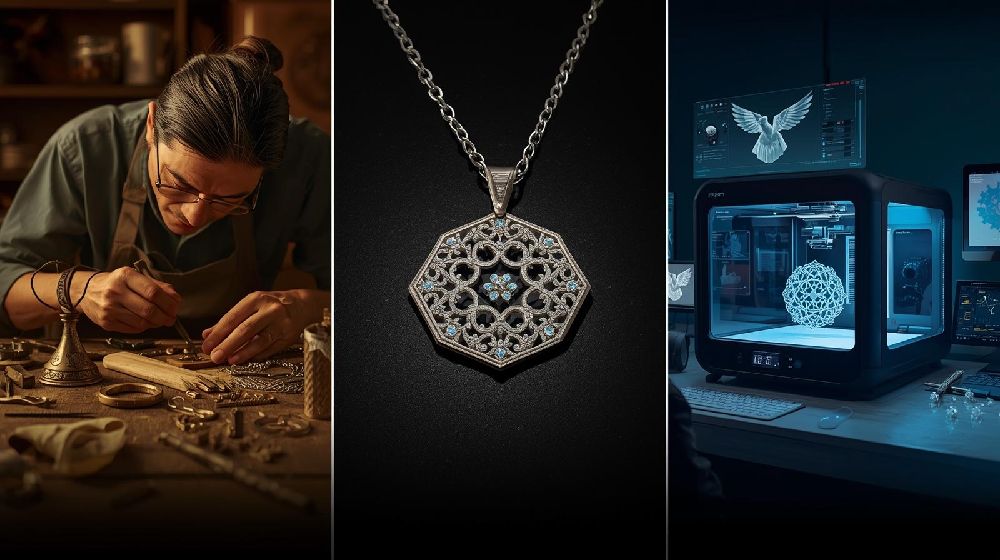
For centuries, jewelry making was rooted in tradition—guided by skilled hands, inherited techniques, and time-honored tools. While craftsmanship remains the heart of jewelry, modern technology has profoundly transformed how these traditional skills are applied, enhanced, and scaled. Today, the fusion of heritage and innovation is redefining jewelry making, making it more precise, efficient, and creative than ever before.
The Era of Handcrafted Excellence
Traditional jewelry making relied heavily on manual processes such as hand sketching, wax carving, metal casting, and hand polishing. Every piece was shaped by the artisan’s experience and intuition. While this approach produced unique creations, it also involved long production times, limited scalability, and a higher margin for inconsistency.
Technology did not replace this artistry—it strengthened it.
Digital Design Reviving Traditional Concepts
The introduction of Computer-Aided Design (CAD) has revolutionized the way traditional ideas are translated into physical jewelry. Artisans can now transform hand-drawn concepts into precise digital models while preserving classic motifs and cultural patterns.
Benefits include:
-
Accurate visualization before production
-
Easy design refinement without material loss
-
Preservation of intricate traditional details
CAD bridges imagination and execution, allowing traditional aesthetics to meet modern precision.
CNC Machines and Laser Tools: Precision at a New Level
CNC machining and laser cutting/welding have taken traditional metalworking to extraordinary levels of accuracy. Where artisans once relied solely on hand tools, machines now assist in:
-
Micron-level metal shaping
-
Seamless joining through laser welding
-
Uniform repetition of heritage designs
This ensures consistency while maintaining the authenticity of traditional designs.
3D Printing: Reimagining Age-Old Processes
Traditional wax carving has evolved with 3D printing, enabling faster and more accurate prototype creation. Jewelry makers can now create detailed wax or resin models directly from CAD designs, reducing trial-and-error and preserving intricate craftsmanship.
This modern method honors traditional casting while improving efficiency and precision.
Enhanced Finishing and Surface Perfection
Advanced polishing, texturing, and surface treatment technologies have elevated finishing standards. Automated polishing systems and controlled finishing techniques deliver:
-
Superior shine and uniform surfaces
-
Reduced metal loss
-
Enhanced durability
The result is jewelry that reflects both traditional beauty and modern perfection.
Quality Control Through Technology
Technology enables detailed inspection at every stage of production. Digital measurement tools ensure accurate weight, thickness, and structural integrity—something difficult to guarantee with traditional methods alone.
This ensures trust, reliability, and premium quality in every piece.
Sustainability in Traditional Jewelry Making
Modern technology has made traditional jewelry making more sustainable. Optimized designs reduce material waste, energy-efficient machinery lowers environmental impact, and precise manufacturing minimizes rework—preserving both resources and craftsmanship.
Artisans and Technology: A Collaborative Future
Rather than replacing artisans, technology empowers them. Craftsmen now focus more on creativity, detailing, and final finishing, while machines handle repetitive precision tasks. This collaboration protects traditional skills while making them relevant in a modern marketplace.
The New Identity of Traditional Jewelry
Today’s jewelry is a perfect blend of heritage and innovation. Technology allows traditional designs to reach global markets, maintain consistent quality, and meet contemporary expectations—without losing their cultural essence.
Conclusion
Technology has transformed traditional jewelry making into a refined, efficient, and scalable craft—while preserving its soul. By enhancing precision, sustainability, and creativity, modern tools have ensured that age-old artistry not only survives but thrives in the digital age.
Traditional jewelry, powered by technology, is no longer just handmade—it is handcrafted with intelligence.