
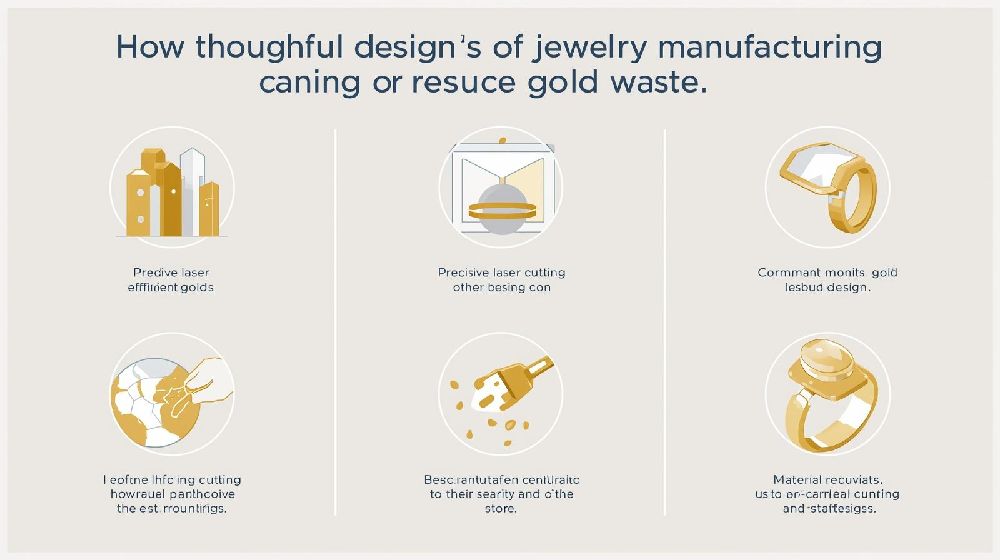
In an era where sustainability meets smart luxury, minimal jewelry design has emerged as more than an aesthetic choice—it’s a responsible manufacturing philosophy. As gold prices rise and environmental awareness grows, minimal designs are redefining how the jewelry industry approaches material usage, production efficiency, and long-term value. The result? Less waste, smarter craftsmanship, and jewelry that aligns beauty with responsibility.
Minimalism Begins with Purposeful Design
Minimal jewelry is built on intentionality. Every curve, edge, and surface serves a function. Unlike overly ornate designs that rely on excess metal and decorative layers, minimal designs focus on clean geometry and structural strength. This clarity reduces unnecessary gold consumption at the design stage itself—before manufacturing even begins.
By eliminating excess volume and decorative redundancy, designers create pieces that are lighter without compromising durability or visual appeal.
Efficient Gold Utilization Through Precision
Modern minimal designs pair naturally with advanced manufacturing techniques such as CNC machining, laser cutting, and precision casting. These technologies allow jewelers to calculate exact gold requirements, ensuring that only the necessary amount of metal is used.
This precision:
-
Minimizes off-cuts and excess filings
-
Reduces the need for re-melting and re-processing
-
Improves consistency across production batches
The outcome is controlled usage of gold with significantly lower material loss.
Lower Casting Losses and Cleaner Production
Complex, heavy designs often lead to higher casting losses due to air pockets, overflows, and structural corrections. Minimal designs, by contrast, feature balanced thickness and simplified forms that cast more efficiently.
Cleaner casting means:
-
Fewer defects and rejections
-
Reduced gold trapped in sprues and runners
-
Less energy required for remelting
This not only conserves gold but also lowers energy consumption throughout the production cycle.
Smarter Polishing, Less Material Removal
Polishing is one of the most waste-generating stages in jewelry making, as gold dust and residue are inevitably removed. Minimal jewelry requires less aggressive finishing because of its smooth surfaces and uncomplicated contours.
As a result:
-
Less gold is lost during polishing
-
Finishing time is reduced
-
Surface quality is achieved with minimal abrasion
This controlled finishing process directly contributes to lower gold wastage.
Designs That Encourage Longevity
Minimal jewelry is timeless. Unlike trend-heavy designs that fall out of favor, minimalist pieces remain relevant across years and generations. This longevity reduces the cycle of melting, redesigning, and remanufacturing—each of which results in material loss.
When jewelry lasts longer in its original form, gold stays in use rather than returning repeatedly to the melting pot.
Lightweight Jewelry, Maximum Value
Minimal design naturally aligns with lightweight jewelry trends. By optimizing form and structure, designers achieve strength without bulk. This approach ensures:
-
Less gold per piece
-
Greater affordability for buyers
-
Lower inventory investment for manufacturers
The same amount of gold can create more finished pieces, improving overall resource efficiency.
Sustainability Without Compromising Luxury
Reducing gold waste doesn’t mean reducing luxury. Minimal designs emphasize craftsmanship, proportion, and surface perfection—qualities that define modern luxury. The beauty lies in refinement, not excess.
Today’s consumers increasingly value sustainability as part of a product’s worth, making minimal jewelry both ethically and commercially powerful.
Conclusion
Minimal designs reduce gold waste by rethinking how jewelry is imagined, engineered, and produced. From efficient design planning to precision manufacturing and timeless appeal, minimalism creates a responsible loop—using less gold, producing less waste, and delivering lasting value.
In the future of jewelry, true luxury will not be defined by how much gold is used—but by how wisely it is crafted.